
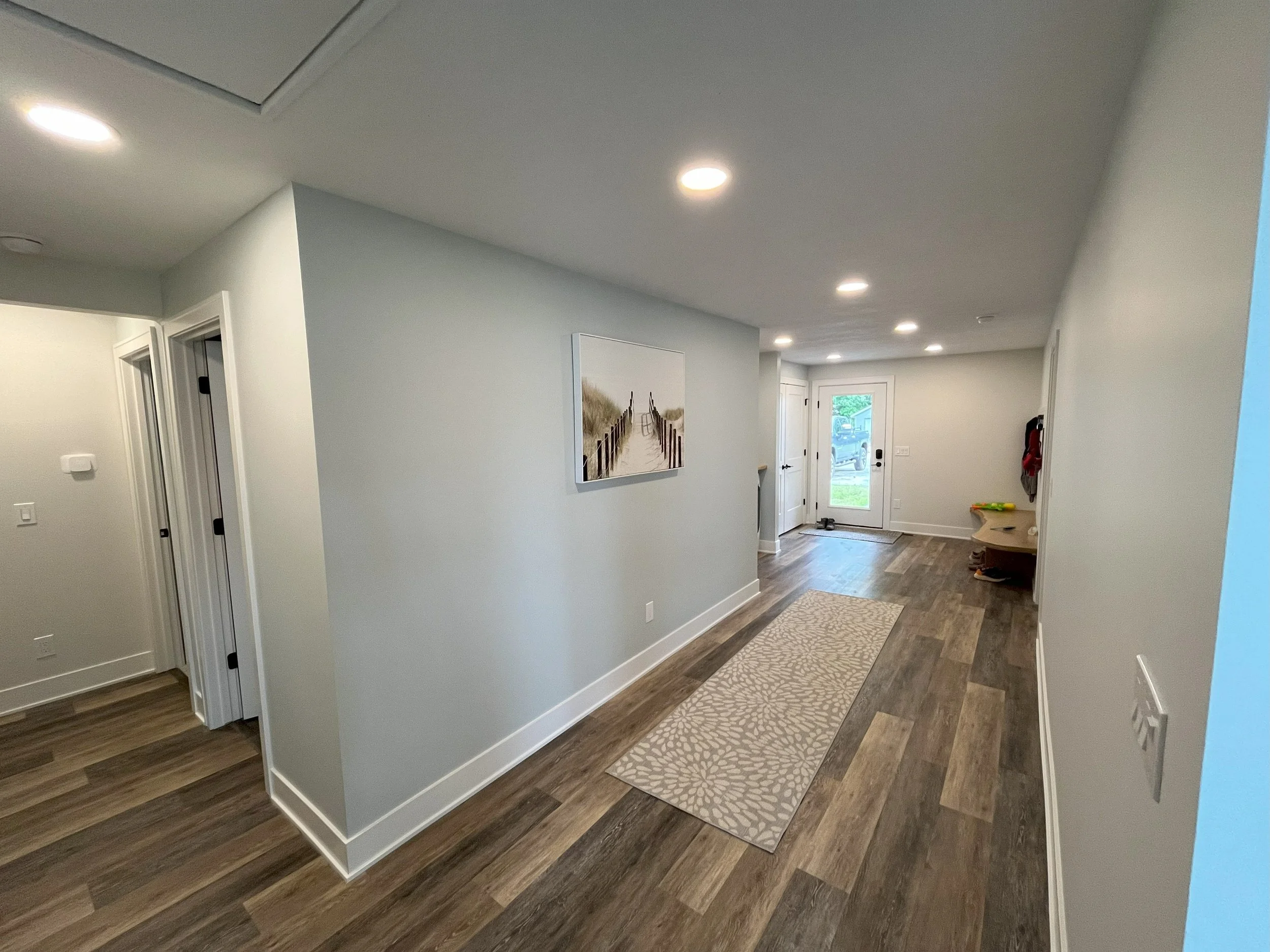
Interior House Painting
in Lansing, Michigan
Proven processes and procedures.
If your home’s interior is looking worn, outdated, or just needs a refresh, our interior repaint process ensures clean lines, durable finishes, and minimal disruption to your home.
Disclaimer: Every project is unique - please use this page as a general guide.
Let’s get started!
Start-to-Finish: Overview
This is the project flow.
Click on each item to scroll down to a dedicated description.
Protection & Setup
Floors, furniture, and fixtures are fully protected before work begins.Surface Preparation
Holes and gaps are filled, problem areas are addressed.Priming (if needed)
Ensures proper adhesion and uniform finish.Professional Paint Application
Applied with brush and roller for smooth, consistent coverage. Spray finishes are available for doors, ceilings, and trim.Final Walkthrough & Touch-Ups
We inspect everything with you before completion.
Protection & Setup
Why is it important?
For the average American, their home makes up 45-60% of their assets - that’s no joke.
Paint splatter, spills, improper usage of tools, and overspray can easily ruin:
$$$ Carpet, Tile, and Hardwood
$$$ Brick, Stone, and Concrete
$$ Appliances
$$ Wood Doors and Trim
$ Personal Belongings
$ Fixtures
And if any of these items need to be replaced, it will likely be difficult to find exactly what you had, if not impossible.
Thankfully, protecting your home from these damages is easy and cheap:
Painter’s Plastic
Masking Paper
Floor Protection
Drop Cloths
Soft-Sole Shoes
Removing and reinstalling hardware and fixtures.
Advanced protection methods:
Air Scrubbers (particulate)
Negative-Air Systems (fumes)
* Protection methods vary by project specs, your needs, and methods being used.
Surface Preparation
Why is it important?
Good surface preparation sets up the paint to perform optimally. Without it, even the best paint will fail to meet expectations for durability and beauty.
Surface prep is the foundation.
Results of bad surface preparation:
Peeling or bubbling paint.
Chipping paint.
Rough surface finish.
Distracting imperfections.
Stripey, uneven finish (flashing, haloing, picture-framing).
Surface preparation includes:
Removing oils or grease.
Sanding (smooths surface and helps paint bond)
Filling Holes
Caulking Gaps
Fixing Damage
Sealing Wood (oil primer)
Fun fact:
Protection and surface preparation makes up around 50-65% (or more) of the time spent “painting.” We’re not painters, we’re preppers. :)
* Surface preparation methods vary by project specs, your needs, and methods being used.
Priming (if needed)
Why is it important?
Priming is the “reset” button for the surface.
Utility of Priming:
Seals repairs for an even finish.
Helps paint stick properly.
Guarantees 3-coat coverage for even the worst color changes.
Seals wood to prevent tannin bleed (yellow).
Prime as needed: spot-prime, or prime all.
* Priming methods vary by project specs, your needs, and methods being used.
Professional Paint Application
Why is it important?
A good paint job should look like a buttery, soft blanket of color draped evenly across each surface.
Hallmarks of bad application:
Stripey-ness.
Obvious brush strokes.
Insufficient coat thickness.
Uneven cut lines.
Paint bumps on baseboards or ceilings.
The proven, professional way:
Applying paint on at the correct thickness.
Keeping a wet edge.
Lightly sand between coats to optimize the surface finish.
Using tape tactfully (pun intended) to achieve crisp lines and protect trim.
Play around how the light interacts with the surfaces.
Advanced painting methods:
Sprayers can be used for extremely smooth finishes on doors, woodwork, and ceilings. This method may require:
Air Scrubbers (particulate)
Negative-Air Systems (fumes)
* Paint application may vary by project specs, your needs, and methods being used.
Final Walkthrough & Touch-Up
Why are they important?
Upon completion of the project, we want to get your eyes on the finished product before signing off.
This is the time to make any small touch-ups if they were needed.
That’s it - you’re all done!
Interested in hiring us?